Facing Criminal Charges After a DUI Accident? Call 24/7 for a Free Consultation
DUI accidents causing injury or death are prosecuted far more aggressively than standard drunk driving cases in California. Depending on the circumstances, drivers may face felony DUI charges, vehicular manslaughter charges, or even second-degree murder allegations under California’s Watson murder rule. A conviction could result in years in prison and a strike on your record.
If you have been arrested and charged with DUI causing death in Vista, the stakes couldn’t be higher. However, even if you were drinking or caused an accident, this does not mean you are guilty of these serious charges. You still have strong legal options and defenses available.
Act quickly if you’re facing DUI accident charges in North San Diego. Contact Vista DUI defense lawyer Peter M. Liss today to schedule your free consultation and start building a strong defense now.
When a DUI Crash Becomes a More Serious Crime
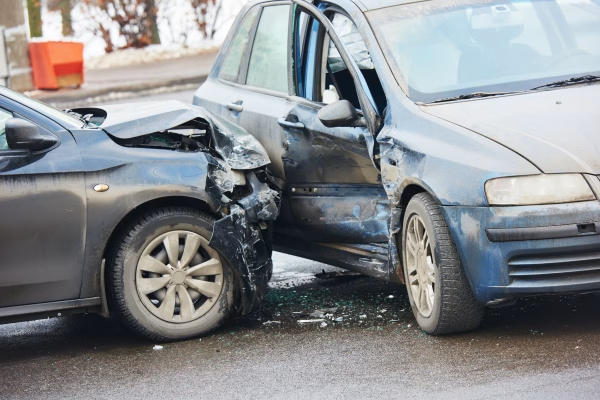
When a driver suspected of driving under the influence is involved in any accident, they will generally be charged with a DUI, even if the crash was not their fault. If they caused the accident and someone was hurt or killed, the charges are much more serious. The following table explains the charges a driver may face after causing a DUI accident that resulted in injury or death:
| Charge | Penalty |
|---|---|
| DUI Causing Injury: 23153 (VC) |
As a misdemeanor: up to one year in jail
As a felony: up to three years in prison |
| Vehicular Manslaughter While intoxicated: 191.5(b) (PC) |
As a misdemeanor: up to one year in jail
As a felony: up to three years in prison With a prior DUI conviction: the charge is charged as second-degree murder, punishable by 15 years to life |
| Gross Vehicular Manslaughter While Intoxicated: 191.5 (a) (PC) | Always a felony; punishable by up to ten years in prison per death and three years per injury |
DUI Causing Injury in California: 23153 (VC)
“When someone suffers even a minor injury after a DUI crash, the prosecution will file charges under 23153 (VC)1,” says Peter Liss. “The San Diego District Attorney typically files these charges as felonies, but may agree to reduce the charges to a misdemeanor depending on the defendant’s record and the circumstances of the case.” This outcome is more likely in cases where the driver has no priors and the injuries are minor.
DUI with injury charges are punishable by:
- Up to one year in jail as a misdemeanor or three years in prison as a felony
- A fine of up to $1,000
- A one-year driver’s license suspension
- DUI school
- Installation of an ignition interlock device
- Restitution to the victims
- A strike under the three strikes law if great bodily injury occurred
Additionally, a conviction in criminal court can be used against you as evidence in a civil court case.
DUI Causing Death —Vehicular Manslaughter While Intoxicated
When someone dies due to a drunk driving car crash (even days or months after the crash), the driver responsible will be charged with 191.5 (PC)2, vehicular homicide while intoxicated. At its least serious, these charges will be filed under 191.5(b) (PC), a “wobbler” that can be filed as a misdemeanor or a felony. Penalties include:
- Up to one year in jail as a misdemeanor or three years in prison as a felony
- A fine of up to $1,000
- A three-year driver’s license suspension
- DUI school
- Installation of an ignition interlock device
- Restitution to the victim’s family
- A strike under the three strikes law when charged as a felony
Like in DUI with injury, a conviction can be used as evidence in a civil court case.
Gross Vehicular Manslaughter While Intoxicated: 191.5 (a) (PC)
If the driver demonstrated gross, rather than ordinary negligence, the charge will be filed as gross vehicular manslaughter while intoxicated. Under the law, gross negligence is defined as conduct that shows a blatant disregard for the safety of others. The penalties are largely the same as those for charges filed under 191.5(b) (PC). However, this DUI offense is always a felony, punishable by up to ten years in prison per death and three years per injured victim.
“In San Diego, the District Attorney almost always files vehicular manslaughter while intoxicated charges as gross, not simple negligence,” explains Liss. “Regardless of whether it is gross or standard vehicular manslaughter, though, I have never seen them file a DUI with death charge as a misdemeanor rather than a felony.”
Learn more about felony DUI charges here.
Watson Murders: 187 (PC)
The most serious DUI homicide charges involve a driver with a prior DUI conviction. These charges are called “Watson murders” and are a type of second-degree murder, filed under 187 (PC)3. They carry a maximum penalty of life imprisonment.
You can read more about these devastating charges on our DUI with priors page.
How Police Gather Evidence in DUI Accident Cases
Criminal cases for DUI accidents causing injury or death start at the crash site. After arriving on the scene, the officer will assess and document how the accident happened by:
Conducting Driver Interviews
Before anything else, officers will speak with drivers and passengers to better understand what happened and to check if anyone needs medical attention
Administering DUI Tests
Police must administer DUI tests after someone dies in a car crash, but they have the option to ask anyone involved in an accident to take a blood or breath test.
Collecting Additional Evidence
This may include witness statements, photographs of the crash scene, pictures of the crashed vehicles, dashcam videos, and nearby surveillance footage.
Calling in an Expert
In serious injury or death cases, San Diego police and Sheriff’s deputies will also often call in a department-trained collision reconstructionist to assess the cause. This analysis includes everything from skid marks to examining vehicles for any preexisting defects that may have contributed to the accident. This report can be challenged if you disagree with its findings.
Reviewing Medical Records
The injuries of those involved can indicate who is at fault, and medical records can serve as evidence in criminal proceedings.
After reviewing all available evidence, the officer will determine who is at fault. “Unfortunately, if a police officer knows a driver was drunk, drugged, or driving dangerously, they may do the bare minimum investigation required by law, even if it does not properly establish fault,” explains Liss. “However, even if they do not believe an intoxicated driver is at fault, they will still arrest them or issue a citation.”
If the officer believes an accident that resulted in serious bodily injury or death was caused by an intoxicated driver, they will book the suspect into the Vista Jail, with bail set at $100,000. However, if an intoxicated driver is injured, they will instead be taken to either Tri-City or Palomar Hospital.
What Does the Prosecutor Need to Prove in DUI Accident Cases?
There are specific elements that must be proven for the District Attorney to secure a conviction in any of these cases.
For DUI causing injury cases in California, they must prove:
- The defendant was intoxicated above the legal drinking limit; and
- They broke a traffic law; and
- Their driving caused an accident; and
- Another person was injured as a result.
For vehicular manslaughter while intoxicated charges, they must show:
- The defendant was intoxicated; and
- They violated a traffic law or drove in a negligent manner; and
- Their negligent or law-breaking behavior directly caused the car accident; and
- Someone died as a result.
In gross vehicular manslaughter while intoxicated cases, they must prove:
- The accused was driving under the influence of alcohol or drugs; and
- They violated a traffic law and acted in a grossly negligent manner; and
- Their gross negligence caused a car crash; and
- Another person died as a result.
Defenses Against DUI Accident Criminal Charges
In these cases, criminal attorneys typically either question the fault of the accident or use traditional DUI defenses. However, if your attorney successfully argues that you did not cause the crash, you can still be convicted of drunk driving; and if you are not convicted of drunk driving, you may still be convicted of reckless driving, vehicular manslaughter, or other driving crimes. “These allegations are very complex, and most defendants who beat the charges are still convicted of a lesser offense,” says Liss.
Some of the best defenses against DUI accident with injury or death charges include:
- Challenging the BAC Test Results
- Disputing the cause of the accident: That you weren’t responsible or that alcohol wasn’t responsible
- Showing that you did not violate a traffic law or drive negligently
- Contesting the cause of injury or death to show it wasn’t a result of the collision
- Questioning the legality of your arrest
- Proving the statute of limitations expired if the prosecutor delayed on filing charges
- Invoking the necessity defense on the rare case involving driving during a true emergency
Depending on the situation, your DUI lawyer may collect evidence to support your defense or hire an independent lab, private investigator, or collision reconstruction expert to challenge the prosecution’s evidence.
When fighting DUI causing injury or death charges isn’t a realistic option, your lawyer will often fight to minimize your sentence or charges by working with the District Attorney to secure a plea bargain. It can often help your case to willingly enroll in a substance treatment program to show that you are proactively taking steps to ensure this situation never happens again.
What To Do After a DUI Accident
If you’re involved in a car crash after driving under the influence of drugs or alcohol, the best thing you can do is to stay silent. Too many people harm their case by apologizing or otherwise confessing guilt, even when they didn’t cause the crash. “To avoid harming your defense, never admit guilt to the victim or say anything to the police without an attorney present,” advises Liss.
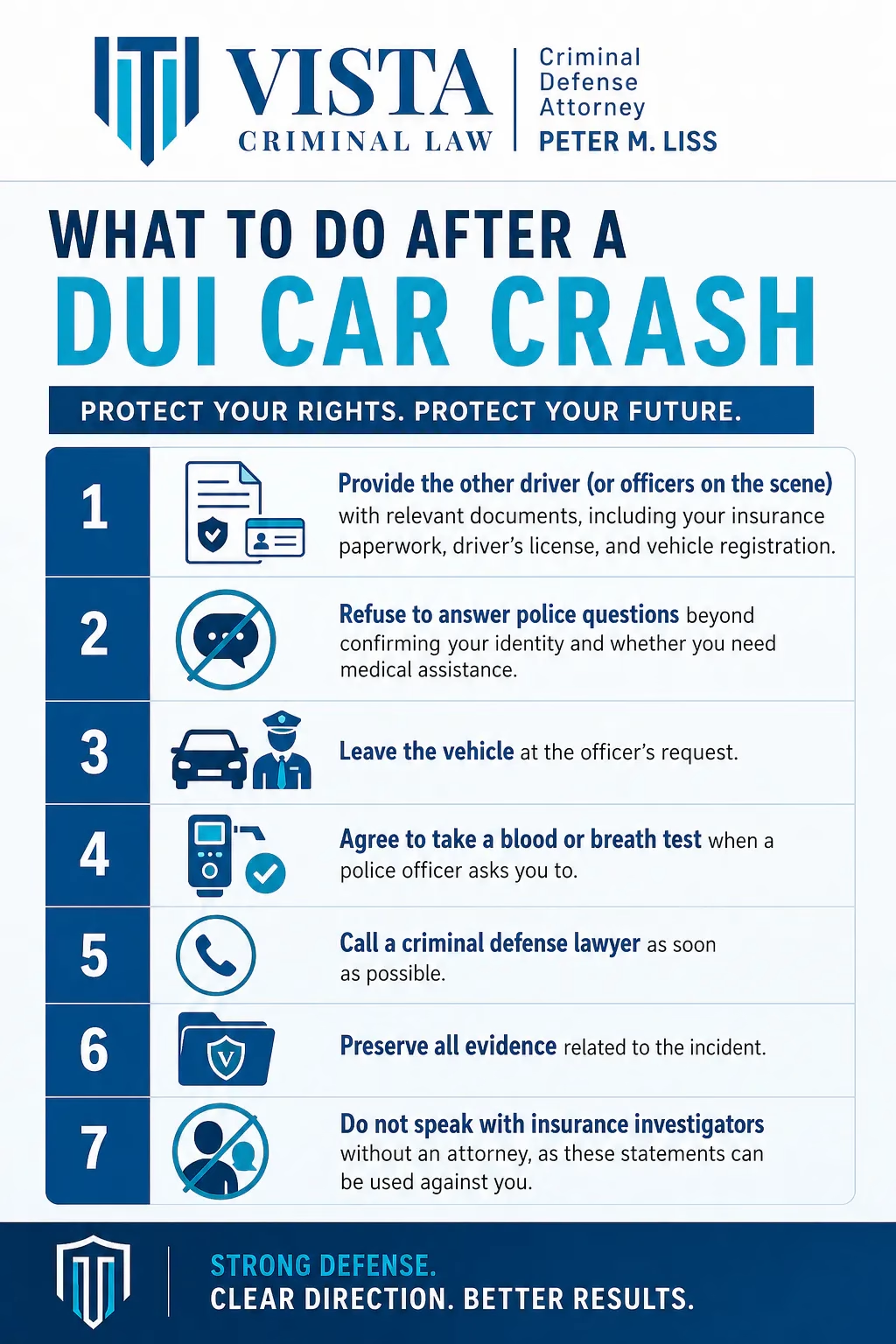
When you’re involved in a car crash after driving while intoxicated, always:
- Provide the other driver (or officers on the scene) with relevant documents, including your insurance paperwork, driver’s license, and vehicle registration.
- Refuse to answer police questions beyond confirming your identity and whether you need medical assistance.
- Leave the vehicle at the officer’s request.
- Agree to take a blood or breath test when a police officer asks you to.
- Call a criminal defense lawyer as soon as possible.
- Preserve all evidence related to the incident.
- Do not speak with insurance investigators without an attorney, as these statements can be used against you.
Always Exchange Information
Never leave the scene of a crash without providing the other driver with your insurance documents. “Whether or not an accident was your fault, the worst thing you can do is flee the scene without exchanging information,” warns Liss. Doing so will open you up to hit-and-run charges, which can leave you behind bars for four additional years. You can legally leave to seek medical assistance, but only if you notify the hospital’s medical staff or the police. In these cases, a lawyer can help ensure you do not face charges for hit-and-run.
DUI Causing Injury or Homicide Case Results by Attorney Peter Liss
These cases are often high-profile affairs, which is why Peter Liss has repeatedly ended up in the news after defending clients accused of these charges. Here are the results for some of the relevant cases he has handled:
- Wet reckless after DUI with injury: When an allegedly drunk driver crashed into a lagoon, he helped his passenger escape, but was still charged with felony DUI with injury, which Peter Liss pleaded down to wet reckless with no jail time.
- One year in jail for gross vehicular manslaughter while intoxicated: After a passenger died when ejected from an overturned vehicle, Mr. Liss was able to get him a sentence of only one year in jail and formal probation.
- Four years and four months for DUI causing injury with high BAC and hit and run: A woman caught with a BAC four times the legal limit was accused of fleeing the scene after injuring a marine in a crash. While she faced a maximum of 9 years in jail, Mr. Liss secured a sentence of half that time.
- One year for gross vehicular homicide while intoxicated: After an intoxicated father killed his son while driving on the 76 Highway near Vista, he was charged with manslaughter while intoxicated. Peter Liss managed to convince the judge that the grieving man should only serve one year in jail and five years of probation.
See more of Peter Liss’ case results here.
How a Vista DUI Lawyer Can Help
Remember that drivers are often innocent of the enhanced charges in these cases. However, what you say following a crash can have a dramatic impact on your criminal case. Do not attempt to defend yourself without the help of a skilled criminal lawyer familiar with California’s complex laws on driving under the influence resulting in injury or death.
Vista DUI accident defense attorney Peter M. Liss has represented dozens of clients facing charges involving injury, manslaughter, or Watson murder throughout North County San Diego.
If you have been accused of injuring or killing someone after driving under the influence, call (760) 643-4050 as soon as possible to schedule a free consultation.
Frequently Asked Questions About DUI Accident Charges in California
Are Drunk Drivers Always At Fault?
There is a common misconception that if a drunk driver is involved in a car crash, they are automatically at fault, but this isn’t always the case. For example, an intoxicated driver who is rear-ended by someone while waiting at a red light is unquestionably not responsible.
Unfortunately, if the police cannot immediately assess responsibility, they will typically assume the intoxicated driver caused the collision. Their “investigation” in these cases may involve little more than taking a few pictures and asking the suspected intoxicated driver to take a sobriety test.
What Happens if You Crash Your Car While Driving Drunk in California?
If you cause an accident while driving under the influence, what happens next will vary based on the circumstances. Major collisions often require the presence of police and EMTs. On the other hand, minor crashes can typically be resolved by exchanging insurance information.
If the police aren’t called, the intoxicated driver may never face criminal consequences. When police are called, they will perform an investigation, and if they believe either driver is drunk, they may perform a field sobriety test or chemical DUI test. If you are found to be under the influence, you will most likely face criminal charges.
Which is Worse, Leaving the Scene of an Accident or Facing Drunk Driving Charges?
It’s always best to stay at the scene of a crash after a DUI. Hit and run penalties are comparable to those for drunk driving, and if you’re caught fleeing the scene, you could be charged with both.
Will You Face Additional DUI Penalties for Getting into an Accident While Drunk?
No. Enhanced charges only apply in cases where the drunk driver is at fault for an accident that injured or killed another person. You will only face standard misdemeanor DUI charges if you caused a crash where no one was harmed, or if you were the only person injured. However, you could face smaller penalty enhancements for causing property damage, such as mandatory restitution or community service.
Are DUI Accidents Always Charged as a Felony in San Diego?
Charges for gross vehicular manslaughter under 191.5(a) (PC) are always felony DUIs. However, while charges for DUI with injury under Vehicle Code section 23153 (VC) or vehicular manslaughter while intoxicated under 191.5(b) (PC) can be filed as a felony, they don’t have to be. These offenses are known as “wobblers,” meaning they can be filed as a misdemeanor or a felony —though San Diego prosecutors almost always file vehicular manslaughter charges as felonies. Luckily, prosecutors and judges have the discretion to reduce these felony charges to misdemeanors. An experienced DUI accident defense attorney can be critical in encouraging them to do so.
Can I be Charged with Driving Under the Influence After the Accident?
Yes, while most drunk drivers involved in collisions will be arrested at the scene, prosecutors have one year to file misdemeanor charges and three years to file charges in a felony.
Will I go to Jail for DUI with Injury in California?
Yes, those convicted of 23153 (VC) will be sentenced to a minimum of 5 days in jail or on house arrest. “Most first-time offenders who caused minor injury will only be sentenced to house arrest whether they were convicted of a felony or misdemeanor,” says attorney Liss. “However, those with priors and those who caused serious injuries will likely end up behind bars.”
Can I get a Restricted License After a Conviction for DUI Causing Injury?
Yes, as long as you didn’t refuse to take a DUI test, you can get a restricted license almost immediately. But first, you must pay the related DMV fees, obtain SR-22 insurance, enroll in a DUI program, and install an ignition interlock device in your vehicle.
How Long is a License Suspension After a DUI Homicide?
The standard license suspension after a vehicular manslaughter while intoxicated conviction is three years. However, the DMV may independently investigate the incident and suspend or revoke the driver’s license of anyone charged with vehicular homicide, even if it is not related to driving under the influence. The DMV can even invoke a lifetime revocation in these cases.
Legal References
- Vehicle Code 23153 (VC) (California Legislative Information) ↩︎
- Penal Code 191.5 (PC) (California Legislative Information) ↩︎
- Penal Code 187 (PC) (California Legislative Information) ↩︎