Think Twice About Drinking and Driving If You Get Paid for Driving
If you drive for a living, a DUI can mean more than fines and possible jail time—it can jeopardize your very livelihood. California DUI laws for professional drivers are among the strictest, affecting CDL holders, chauffeurs, and rideshare drivers alike. In many cases, you may even be subject to a lower BAC limit of 0.04%.
If you are a CDL holder, a taxi driver, a chauffeur, an Uber driver, a Lyft driver, or otherwise earn a living through driving, you must act quickly to defend your license and your future. Call attorney Peter Liss today to schedule a free initial consultation to discuss your case.
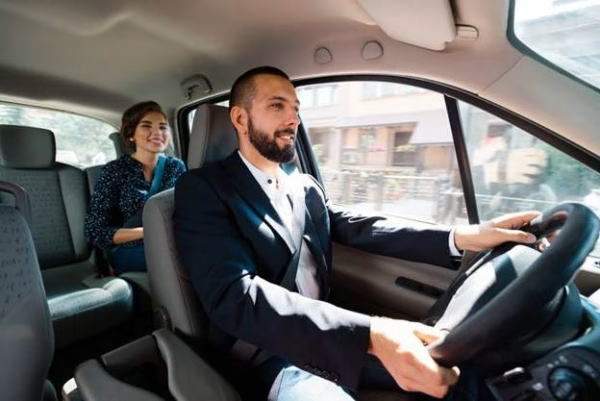
Why DUI Charges Are More Serious for Professional Drivers
You have much more at stake as a commercial or for-hire driver. Losing your license could put you out of work temporarily, and many employers will not retain or hire drivers with a DUI. Commercial license suspensions last twice as long as regular suspensions, and a second DUI can permanently cost you your CDL.
All this means you could face devastating financial consequences as you lose your income at the same time that you are asked to pay fines, DUI class fees, higher insurance premiums, and more.
Who is Considered a Professional Driver?
Anyone who earns money for driving would fall under this category, including:
- Commercial truck drivers
- Rideshare drivers
- Limousine drivers
- Taxi drivers
- Delivery drivers
These drivers could all lose their jobs if they are convicted of DUI, even while they are off duty. A defense attorney like Peter Liss can help.
How DUI Laws Change for Professional Drivers in California
Most drivers have a BAC limit of 0.08% under 23152 (VC)1. However, under 23152(e) (VC), drivers with paying passengers, and under 23152(d) (VC), Class B or A license holders, are subject to a 0.04% limit. At this BAC, just one or two drinks can result in a DUI.
“It’s worth mentioning that any driver can get a DUI if the officer believes they have consumed alcohol or drugs that have negatively impacted their driving ability,” says Liss. “In San Diego, it is common for prosecutors to charge a driver with a DUI if they have a breath or blood reading of .06 or above.” Drivers suspected of driving under the influence of drugs are not subject to a BAC limit, but can be charged if an officer believes that any substance (legal or not) has affected their driving.
Like all other drivers, professional drivers are subject to the state’s Implied Consent Law and must submit to a chemical DUI test once placed under arrest. Additionally, CDL holders must submit to preliminary alcohol screening when requested to do so by an officer.
The penalties are mostly the same for professional and non-professional drivers, though commercial licenses are suspended longer than regular licenses. For first offenses, standard penalties include:
- A fine of $390-$1,000
- Up to 6 months in jail (though this is rare for first-time DUIs)
- A six-month license suspension
- Mandatory SR-22 insurance
- Possible vehicle impoundment
To learn more, visit our dedicated page on California DUI penalties.
DUI for Uber and Lyft Drivers
While there are no nationwide laws instituting a lower BAC for drivers of Uber, limo, taxi, or other passenger services, California law requires these drivers to maintain a BAC below 0.04% while on the job. When they do not have a paying passenger in the vehicle, they are subject to a 0.08% limit like other drivers. “This exemption applies even if the driver is using the vehicle they use for work and is technically ‘on the clock,’” warns Liss. “Most employers (including Uber and Lyft) will fire drivers caught using any amount of alcohol and drugs on the job.”
A DUI makes it much harder to work as a rideshare driver or chauffeur in California. Most companies refuse to hire anyone with a record of DUI, unlicensed driving, reckless driving, or hit-and-run.2 These companies also often reject applicants convicted of violent crimes, sex offenses, or theft.
Uber or Lyft may permanently deactivate you if you get a DUI while employed by them.3 Getting reactivated will require you to:
- Prove the allegations were false;
- Show that you had the charge expunged; or
- Wait a minimum of 7 years.
DUI for Commercial Drivers (CDL Holders)
Under California and federal laws, commercial driver’s license (CDL) holders cannot drive a commercial vehicle with a BAC above 0.04% even if they’re off the clock. Even as few as one or two beers can leave them over the legal limit to drive. These drivers can still operate passenger vehicles with a BAC of up to 0.08%.
These drivers are subject to an immediate disqualification of their CDL4. The suspension will last one full year, or three years if the driver was transporting hazardous materials. While CDL holders can qualify for a restricted license (provided they didn’t violate the Implied Consent Law), this only allows them to operate class C vehicles, not commercial vehicles.
A second DUI, even in a personal vehicle, will permanently prohibit someone from possessing a CDL. If a driver had a DUI before obtaining their CDL, they can get a license, but only after 10 years have passed and the charge is removed from their DMV record.
Under federal law, CDL holders cannot avoid a license suspension by pleading down to a non-alcohol-related driving charge.5
Delivery Driver DUIs (DoorDash, Amazon, Uber Eats)
The reduced BAC level required under 23152(e) (VC) does not apply to all gig drivers; it applies only to those carrying passengers. If you deliver products for Amazon, DoorDash, Uber Eats, Walmart, or any other company, you are still subject to the same 0.08% BAC as other drivers.
However, getting a DUI still has immediate consequences for gig workers who have their license suspended. Employer policies often prevent hiring drivers with a DUI, especially during the three years they must carry SR-22 insurance. Some companies will only hire drivers after an SR-22 is no longer needed, while other employer policies prohibit hiring those with DUIs for 5, 7, or even 10 years after conviction.
Key Differences Between Driver Types Under DUI Law
Professional drivers face different consequences based on the type of work they do and whether they were working at the time. Here’s how these DUI laws break down:
| Driver Type | BAC Limit | Job Risk | License Issues |
|---|---|---|---|
| Average Person | 0.08% | Minimal, unless they operate a vehicle for work | A minimum license suspension of 6 months with a restricted license option |
| Delivery Driver | 0.08% | Unlikely to work in the field for at least 3 years | A minimum license suspension of 6 months with a restricted license option |
| Rideshare/Taxi/Limo Drivers |
0.04% with paying passenger 0.08% all other times |
Unlikely to work in the field for at least 7 years, usually 10 in California | A minimum license suspension of 6 months with a restricted license option |
| Commercial Driver’s License (CDL) Holder |
0.04% while driving a commercial vehicle 0.08% all other times |
Most companies will not hire drivers for 5-10 years, but some will | CDL suspension for 1 year; Class C suspension for 6 months with a restricted license option |
Will You Lose Your Job After a DUI?
Most professional drivers are contractually required to notify their employer if they receive a DUI. While the law does not prohibit continuing such work, actual employment depends on the employer’s internal policies. “Few companies are willing to take the risk with an employee who drives as part or all of their position,” explains Liss.
CDL holders who receive a second DUI, even in a personal vehicle, will be subject to a lifetime ban on obtaining a Class A or B license.
License Consequences & DMV Hearings
Those who drive for a living must work quickly to fight these charges or risk losing their license for at least 6 months. You only have 10 days after your arrest to request an administrative per se hearing with the DMV, or you will be subject to an automatic license suspension.
For most drivers, including gig workers, chauffeurs, and taxi drivers, a first-time license suspension lasts four months. CDL suspensions usually last one full year. However, if the driver was transporting hazardous materials, they’ll lose their CDL for three years. Even commercial license holders can challenge their suspension at the DMV hearing.
California allows drivers to bypass the standard waiting period for a restricted license if they install an ignition interlock device in their vehicle. Because restricted licenses allow drivers to go to work and back, it is technically possible to continue a driving-based job after obtaining one. However, most employers will not continue to employ someone to drive after learning that the individual has received a DUI.
While you cannot drive a commercial vehicle with a restricted license, CDL holders can still use one to drive their personal vehicle.
Learn more about DMV license suspensions and hearings here.
Legal Defenses for Professional Drivers Facing DUI
Fighting the DUI charges could help you keep your job. If you’re facing DUI charges in San Diego, you should always contact a defense attorney as soon as possible, especially if you are a commercial driver, a delivery driver for a company like Amazon or DoorDash, or a rideshare driver for Lyft or Uber. Some of the most common defenses your lawyer may use include:
- Showing there were issues with the traffic stop or arrest.
- Claiming you were not given a warning about the consequences of refusing a DUI test.
- Proving issues with the DUI tests.
- Arguing that there is no valid proof of your impairment.
If your BAC was between 0.04% and 0.07%, you may also use defenses specific to your exact DUI charge, for example:
- Proving there were no paying passengers in the car.
- Arguing you were not driving a commercial vehicle at the time of arrest.
Learn more about how to protect your license on your DUI defense strategies page.
What To Do Immediately After a DUI Arrest
If you have been charged with a DUI, you should act quickly to protect your rights. Immediately:
- Write down everything you remember about the event.
- Request an administrative per se hearing with the DMV —this must be done within 10 days of your arrest.
- Call a lawyer experienced in representing cases like yours.
Vista attorney Peter M Liss has over 40 years of experience representing clients accused of DUIs in San Diego County, including CDL holders, rideshare drivers, and other professionals. He can help you too. Please call (760) 643-4050 as soon as possible to schedule the charges.
FAQs About DUI for Professional Drivers
How Long After You Get a DUI Can You Drive for Uber or Lyft?
With a DUI in most states, you can usually drive for Uber and Lyft 7 years after the arrest. However, because California has a 10-year lookback period before the charge no longer appears on your DMV record, you must wait at least that long before getting hired at one of these companies if your arrest took place here.
Will a DUI Affect My Job as a Driver?
Almost always. Most professional drivers, including commercial drivers, are required to sign agreements stating that they will tell their employer if they get a DUI. If your job requires you to drive, you will probably get fired, as companies typically limit their liability by firing drivers currently holding SR-22s.
What Happens If a CDL Driver Gets a DUI in California?
Commercial truck driver DUI penalties are largely the same as those for drivers of passenger vehicles, and include DUI classes, license suspensions, fines, and jail time. The main differences in these DUIs are that CDL holders are subject to a lower BAC limit, are subject to a longer license suspension, and will permanently lose their commercial vehicle license after two DUIs, which is why these drivers should contact a San Diego DUI lawyer as soon as possible.
What are the DUI Consequences for Gig Workers?
Lyft and Uber drivers are subject to the same DUI consequences as any other California driver, which can include fines, license suspensions, DUI classes, and jail time. The only difference is that they have a lower BAC limit.
Can Delivery Drivers Get a DUI at Work with a 0.04% BAC?
No. While commercial license holders and rideshare drivers are subject to a lower BAC, delivery drivers not operating commercial vehicles are subject to a 0.08% BAC, like most other drivers.
Legal References
- Vehicle Code 23152 (VC) (California Legislative Information) ↩︎
- Driver Requirements (US Lyft Help) ↩︎
- Understanding Why Drivers and Delivery People Can Lose Access to Their Accounts (Uber) ↩︎
- Disqualification of Drivers (Federal Motor Carrier Safety Administration) ↩︎
- Prohibition on Masking Convictions (Code of Federal Regulations) ↩︎