Operating a Vessel Under the Influence is a Crime in California
Relaxing with a beer while cruising on the waves may seem harmless —but one too many could leave you charged with boating under the influence, a serious crime under California Harbors and Navigation Code 655 (HNC). Because impaired boating poses significant risks, police and the United States Coast Guard actively patrol San Diego County waterways and arrest and ticket individuals suspected of operating a vessel while intoxicated.
While it’s common for people to shrug off these charges, do not assume it is a lesser crime just because it occurred on the water. If you have been arrested for boating under the influence, Vista DUI attorney Peter M. Liss can help.
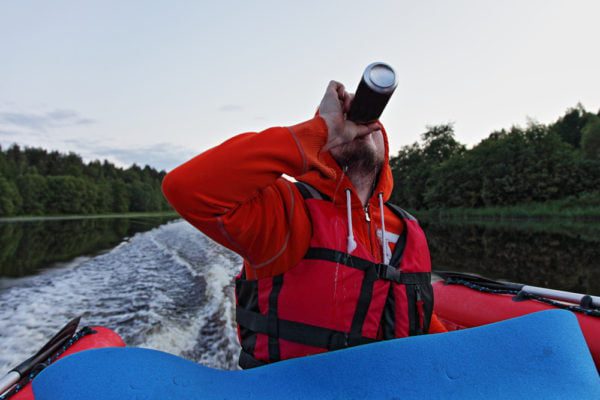
What Is Boating Under the Influence (BUI)?
California Harbors and Navigation Code 655 (HNC)1 covers many boating practices, specifically:
- 655(a) (HNC) prohibits reckless and negligent boating
- 655(b) (HNC) prohibits boating under the influence of drugs or alcohol
- 655(c) (HNC) sets a BAC limit of 0.08% for most boaters
- 655(d) (HNC) sets a BAC limit of 0.04% for commercial
These laws apply to all types of water vessels, including Jet Skis, water skis, aquaplanes, paddleboards, innertubes, and any similar devices.
Is Boating Under the Influence the Same as a DUI?
The laws regarding boating under the influence of alcohol or drugs are similar to driving under the influence in a motor vehicle, including the BAC limits and penalties. However, if you are convicted in a California BUI case, your license will not be suspended as it would be in a standard DUI case. You will also not be required to install an ignition interlock device in your vehicle.
Another big difference between DUI and BUI is that while you cannot have an open container of alcohol in a vehicle while driving, California boating laws allow both passengers and operators to drink, as long as the operator does not become intoxicated.
BUI vs DUI in California
| Distinction | DUI (First Offense) | BUI (First Offense) |
|---|---|---|
| Legal Code | 23152 (VC) | 655 (HNC) |
| BAC Limit | 0.08% for most adults | 0.08% for most adults |
| License Suspension | Yes | No |
| Open Container Illegal | Yes | No |
| Max Jail Time | 6 Months | 6 Months |
| Max Fines | $1,000 | $1,000 |
| DUI Class | 3 Months | 3 Months |
Can You Drink Alcohol on a Boat in California?
Yes. Unlike a car, individuals in a boat are allowed to drink. In fact, operators can even drink —as long as they remain unimpaired and below the legal BAC limit. These limits also apply to individuals using water skis or inner tubes, so stay below the legal limit while performing these activities.
What are the Legal BAC Limits for Boating in California?
The legal blood alcohol concentration (BAC) for boating under the influence is the same as that of driving:
- 0.08% for most adults
- 0.01% for juveniles2
- 0.04% for those operating a commercial vehicle
California’s Implied Consent law applies to mechanically powered boats, requiring operators to submit to blood or breath tests after arrest for BUI. Refusing these tests can be considered evidence of guilt and may result in mandatory minimum jail time.
If you are using a boat that is not powered by a motor, including a non-motorized sailboat, kayak, canoe, or paddleboat, you are not required to submit to a chemical DUI test. While you are still required to abide by the state’s BAC limits, if you refuse to take a DUI test when using a non-motorized vessel, it may be difficult for the prosecution to prove your guilt.
Just as you are not legally obligated to take a field sobriety test or submit to a portable screening test unless you are a minor or commercial driver, you are not required to take these tests if suspected of boating under the influence.
Learn more about blood alcohol content on our dedicated practice page.
Penalties for Boating Under the Influence in California
Although BUI does not trigger license suspension or ignition interlock device rules, other penalties mirror those for vehicle DUIs. The specific sentence depends on your record and whether an injury or death occurred.
“Note that a conviction for boating under the influence will count as a prior conviction if you are charged with vehicle-related DUIs in the future,” says attorney Peter Liss, “and past DUIs will also count against you for BUI sentencing.”
Here’s what to expect based on your situation:
First Offense
For a first-time BUI in California, penalties include up to 6 months of jail time, $1,000 in fines, and a 3-month drug or alcohol program.
See the full extent of consequences for first-time DUIs here.
Repeat Offenses
For a second or third offense in 10 years, you could be sentenced to up to 1 year of jail time, $1,000 in fines, and an 18-month DUI class. If you have three prior offenses, you could even be charged with a felony and be sentenced to up to three years in state prison.
Find out more about DUI with priors here.
BUI Causing Injury
Aggravated BUI is charged when someone was injured due to a boat operator being intoxicated. This offense may be charged as a felony or misdemeanor. Penalties include up to 1 year in jail and a $5,000 fine when charged as a misdemeanor, or up to 3 years in prison when charged as a felony.
Felony charges will count as a strike under the state’s Three Strikes Law, which means you could face life imprisonment if you face a felony offense with more than two other felonies on your record.
Read more about DUI causing injury or death charges here.
Implied Consent Violations
While you will avoid the additional license suspension for refusing to submit to a blood or breath test, you will still be subject to mandatory minimum jail time and be required to attend a lengthier DUI class. For a first-time DUI, classes will last at least 9 months.
Learn more about the penalties of violating the Implied Consent law here.
No matter the charges, a top San Diego BUI defense lawyer can protect your rights and fight for your best results.
How to Fight a Boating Under the Influence Charge in CA
Many of the same defenses used in DUI cases also apply to BUIs. While there are many different defense strategies for these charges, always avoid saying anything to the police without your attorney present, or you may accidentally say something that could harm your defense later on. Allow your attorney to build your defense, which may include arguing:
- Your boat was stopped illegally without reasonable suspicion.
- The chemical test was performed improperly or illegally.
- You were stopped at an illegal checkpoint.
- You have a medical condition that could affect the Breathalyzer.
- Your BAC rose between the time you were boating and the time you took the blood or breath test.
- The officer failed to provide a warning on the consequences of violating the implied consent law.
- You were not intoxicated.
If you were operating an unmotorized vessel and refused to take a chemical DUI test, you could also argue that there is insufficient evidence to prove your guilt without. “While it is rare for charges in these cases to be completely dropped, I am sometimes able to secure my clients a ‘wet boating’ charge through a plea bargain, which is similar to a ‘wet reckless,’ explains Liss. “This alternative results in lesser penalties, but it still counts as a prior DUI for sentencing.”
Here are more common DUI defenses that could work in BUI cases.
How Police Enforce BUI Laws in San Diego County
Police departments in areas with lakes, rivers, or beach access often have specialized water patrol units or, at the very least, watercraft that allow officers to investigate incidents on the water. “San Diego even has the San Diego Harbor Police, a department tasked solely with patrolling and enforcing the laws along the San Diego Bay and its waterfront,” notes Liss.
The US Coast Guard may also stop and arrest boaters suspected of drinking. Under federal law, they can even board boats and conduct safety checks without suspicion of a crime.3
When they are in waters that fall under the jurisdiction of local police departments, they will hand criminal suspects over to the police for prosecution. While in federal waters, they can arrest suspects and charge them under federal law, which is largely similar to state law.
Note that attorney Peter M. Liss does not handle federal charges, but will represent people arrested by the Coast Guard who are charged under California state law.
Officers may identify intoxicated boaters in many different ways:
- During a boating checkpoint, where vessels are checked for proper safety equipment and operator sobriety.
- While stopping a vessel after observing reckless or erratic behavior, such as violating wake rules, speeding, navigating poorly, or not using navigation lights at night.
- As part of an investigation following a boating accident.
Just like a normal DUI, your lawyer can challenge the stop if it violated the law.
Why BUI Is More Dangerous Than DUI
Some boaters think boating under the influence is less risky than driving under the influence because there’s usually more wide-open space around a boat than a car. However, experts tend to believe that boating while intoxicated is actually far more dangerous. In fact, alcohol is involved in over half of all boating accidents that result in injuries or fatalities.4
Here’s why boating under the influence is so dangerous:
- It can be easier to become intoxicated on the water and harder to judge your level of intoxication because exposure to sun, wind, vibration, and motion may affect your senses and make you feel more tired.
- Most boaters have far less experience on the water than on the road.
- There are many hidden dangers under the surface of the water, including rocks, dunes, fallen trees, and manmade debris.
- Passengers in a vehicle are usually seated with seatbelts, whereas boat passengers may be standing or walking.
- When something goes wrong, it may be difficult to get help, and rescue crews often take much longer to arrive.
All of this means that there is far more risk in boating accidents, which is why police and prosecutors take these allegations so seriously.
When to Contact a San Diego County BUI Lawyer
If you have been accused of boating while impaired by drugs or alcohol, you could face serious penalties and more serious sentencing if you are charged with a future DUI. Do not take chances with your future. Always call a DUI defense lawyer with experience in boating crimes as soon as possible.
Attorney Peter Liss has been practicing law for over 40 years and has helped dozens of clients fight DUI charges and boating-related alcohol offenses. If you have been charged with a BUI after operating a boat under the influence anywhere in San Diego, please schedule a free consultation at his Vista DUI office by calling (760) 643-4050 or (858) 486-3024.
Frequently Asked Questions About BUI Charges
Do you Lose Your License for BUI in California?
No. Violating the state’s impaired boating laws will not result in a license suspension, since this is not a vehicular crime. However, it will count as a prior if you are charged again in the future.
Can You Get a DUI on a Boat in California?
You can’t get a true DUI on a boat, but there is a very similar crime that only applies to boating and other water vessels. The main difference between a BUI charge and a DUI is that there are no license consequences for boaters.
Is BUI Worse Than DUI?
It depends on what you mean. If you’re referring to the relative risk of each activity, BUI is more likely to result in injury or death. When it comes to penalties, though, DUI is worse because it carries mandatory license suspension, which is not a potential penalty in boating cases.
Is BUI a Misdemeanor or Felony?
In most cases, boating while intoxicated is a misdemeanor. However, the crime may be charged as a felony if the defendant has three or more prior DUI or BUI convictions on their record, or if they caused an accident that resulted in the injury or death of another individual.
Legal References
- Harbor and Navigation Code 655 (HNC) (California Legislative Information) ↩︎
- Harbor and Navigation Code 655.5 (HNC) (California Legislative Information) ↩︎
- Law Enforcement (United States Code) ↩︎
- Boating Under the Influence (Boat U.S. Foundation) ↩︎