What Can Throw Off a Breathalyzer? Understanding False Results
Many people claim they know how to “beat a Breathalyzer,” but most of these rumors are ineffective at best and could raise your BAC at worst. While Breathalyzers are not entirely accurate and can be affected by external factors, they’re more prone to falsely high readings than falsely low ones.
Factors that can affect DUI breath tests include medical conditions, diets, and breath patterns. Here’s what can actually affect a breathalyzer, according to Vista defense lawyer Peter M. Liss.
Can You Cheat a Breathalyzer?
There is no reliable method to cheat a Breathalyzer. Most purported techniques are myths, and some may even increase your BAC reading.
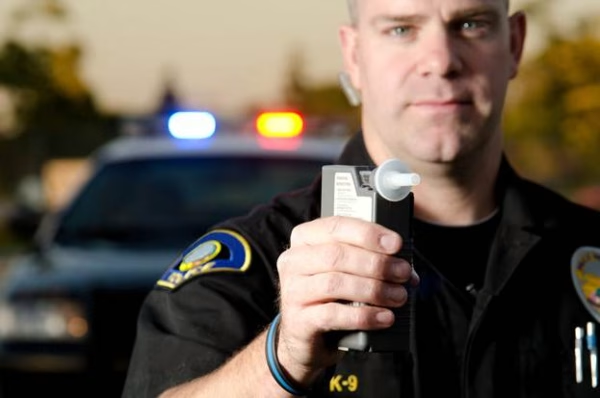
Can You Beat a Breathalyzer?
You can’t hack the results of your breath test using any of the common myths spread online promising to teach people how to pass a Breathalyzer. But in a way, it is sometimes possible to ‘beat’ the breath test in a DUI case —by fighting the results with the help of a skilled defense attorney.
“The best thing you can do is avoid trying to cheat and instead, take the test, write down what happened, and promptly contact a lawyer to discuss your legal options, including contesting the breathalyzer results,” says attorney Peter Liss.
Keep in mind that the Breathalyzer is not the only DUI test. Blood tests are much more accurate and have the advantage of preserving a sample that can be retested.
Common Breathalyzer Myths That Don’t Work
Most methods that claim to fool the Breathalyzer will have no effect on your results. Don’t rely on these ideas to help you avoid a DUI:
Sucking on a Penny
Many people claim sucking on a penny will help you beat a Breathalyzer because, supposedly, the copper will neutralize the alcohol in your mouth. This theory is flawed for multiple reasons and will not lower your BAC because:
- Modern pennies only contain 2.5% copper.1
- Copper doesn’t neutralize alcohol.
- Breath tests are designed to measure alcohol in the lungs, not the mouth.
- Officers check suspects’ mouths before administering breath tests and would find and remove the coin before giving the test.
Putting a Battery in Your Mouth
Some people believe that the charge from a battery will interfere with the sensor in a Breathalyzer. This trick will not lower your DUI test results for multiple reasons:
- Breath test sensors are located inside the device and will be unaffected by a battery in your mouth.
- Officers will check your mouth for a foreign object before administering these tests.
Putting a battery in your mouth can also present multiple hazards, putting you at risk of electric shock, choking, or chemical burns from battery acid.
Using Breath Mints or Gum
According to Liss, “Mints or gum may sometimes mask the smell of alcohol, making it more difficult for a police officer to detect during a traffic stop. However, using them could arouse suspicion and lead officers to ask further questions or request a field sobriety test.”
But while mints and gum can freshen your breath and hide the smell of alcohol from humans, they won’t help you with the Breathalyzer because these machines detect vapors from deep in your lungs. The same is true with smelly foods, like onions or garlic —but at least mints and gum make your breath smell nice.
Eating Toilet Paper or Fabric
Some desperate people have tried eating toilet paper or clothing to absorb the alcohol in their stomachs, keeping it from entering their bloodstream. Just as eating food while drinking can keep your BAC reading lower, eating paper or fabric could help you avoid a DUI if you did it before or while you drank alcohol.
Consuming anything after you have finished drinking will not lower your BAC, as it enters your digestive system too late to affect the alcohol already present in your blood.
“If you are going to eat something before or while you drink to help keep your blood alcohol concentration down, stick with food,” suggests Liss. “Paper and clothing aren’t very good for your digestive system.
What Can Actually Affect a Breathalyzer Test?
Breath tests are not perfect and can be impacted by many factors that can produce falsely high readings, including:
Products That Can Raise BAC Readings
Many commonly used products can actually increase your breath test results. You may want to opt for a blood test if you recently used:
- Mouthwash containing alcohol, as it may get trapped in gum pockets and inflate your BAC reading.
- Cigarettes, as heavy smokers have higher levels of acetaldehyde in their systems that register as alcohol on Breathalyzers.
While they don’t contain enough alcohol to make most adults fail a breath test, juveniles and those on probation for DUI should be cautious when driving after using cold medicines or kombucha, as these products both contain low amounts of alcohol. Even a small amount could put your BAC above 0.01%, the legal limit for juveniles and individuals on DUI probation.
Learn more about the complexities of juvenile DUIs here.
Medical Conditions That Can Cause False Positives
Unfortunately, even just being sick or having a medical issue can sometimes cause your breath test results to be artificially high. Be cautious if you have:
Diabetes
While most people think Breathalyzers test how much alcohol is on someone’s breath, they actually measure for methyl compounds, which include alcohol and similar compounds, such as acetone. Unfortunately, hypoglycemic spikes can cause ketones to build up in a diabetic’s body. One of those ketones is acetone, which can cause a Breathalyzer to believe a diabetic’s BAC is higher than it actually is.
Acid Reflux/GERD
Breathalyzers are supposed to measure air from deep within the lungs, and any alcohol in a test taker’s mouth will produce an artificially high reading.
“Puking, belching, GERD, and acid reflux all produce mouth alcohol,” explains Liss. “Police are not supposed to give Breathalyzer tests to those who have vomited or belched within 15 minutes of the test, but they sometimes fail to notice that a suspect has regurgitated —especially if only involved acid reflux.”
A Fever
Studies have shown that even a 1 °C change in a person’s body temperature can increase breath test results by up to 8.62%.2 “If you have a fever or even just have a higher-than-average body temperature,” warns Liss, “this slight increase could mean the difference between passing and failing a Breathalyzer test.”
The problem can be compounded if you consumed a cold medication containing alcohol.
A Restrictive Diet
What you eat and how often can also affect your breath test results. While it’s common knowledge that drinking on an empty stomach can get you tipsier faster since your body will absorb the alcohol more quickly, dieting can affect your Breathalyzer result in other ways.
Many diets, including low-carb, keto, paleo, gluten-free, and fasting, cause your body to build up ketones, including acetone. The breath test reads acetone as another form of alcohol, often causing it to record falsely high results when given to dieters.
Periodontal Disease or other Certain Dental Work
Periodontal diseases, including gingivitis, cause pockets inside the gums, which can trap alcohol inside the mouth. This same problem occurs with dentures, bridges, or dental caps. While this alcohol may not be ingested and result in a person becoming more intoxicated, it will result in pure alcohol vapors entering a person’s breath when they exhale.
Because Breathalyzers are designed to test the blood alcohol content from the air deep in a subject’s lungs, alcohol fumes in the mouth can cause falsely high readings. “Unlike many other things that cause mouth alcohol, these dental issues prevent alcohol from leaving the mouth during the 15-minute period of officer observation before the administration of a breath test,” says Liss.
While Breathalyzers do have mouth alcohol detectors, which are supposed to invalidate a breath sample coming from mouth alcohol, experts say these detectors are not entirely reliable.3
To make matters worse, individuals with severe gingivitis frequently have bleeding gums. If they blow blood into the Breathalyzer chamber, the results could be even higher because the blood has absorbed the alcohol trapped in the gums.
Can Breathing Patterns Affect a Breathalyzer Test?
A Breathalyzer can be affected by certain breathing patterns. “If someone exercises or hyperventilates just before using the device, their lungs will take in new, clean air that hasn’t absorbed as much alcohol as the air in their capillaries,” explains Liss.
Controlled laboratory studies found that heavy breathing reduced BAC by as much as 10%,4 though this isn’t practical or applicable in a real-world situation. Police won’t let DUI suspects exercise or hyperventilate before taking a breath test. Officers look for attempts to manipulate the Breathalyzer, and such attempts can be used as evidence against a suspect.
Interestingly, other breathing patterns can raise your BAC, including holding your breath before testing.
“Also, avoid breathing in, rather than out, while taking a breath test,” advises Liss, “as Breathalyzers can detect which direction air is flowing.” If officers recognize that you are breathing in on the test, they may automatically fail you for attempting to cheat.
Better understand BAC by reading more about Blood Alcohol Content here.
What to Do If Your Breathalyzer Result Was Wrong
You don’t have to fall victim to one of these myths to end up with a falsely inflated BAC. Many things can cause breath tests to go wrong, and a DUI defense attorney can help you challenge the results under the law.
To help protect your rights and freedoms during a traffic stop, avoid saying anything beyond confirming your identity, as anything you say could be used as evidence. For example, saying you only took NyQuil can be considered evidence that you had medication that can affect your driving.
When you are released from custody, immediately write down every detail of your DUI experience before, during, and after the traffic stop. Even a tiny detail, like the smell of chemicals in the room, can help your lawyer fight your Breathalyzer results.
Once you’ve written everything down, call a lawyer as soon as possible. Remember that you only have 10 days to request a hearing with the DMV to protect your license.
Here’s a more detailed account of what to do during a DUI traffic stop.
Can You Challenge a Breathalyzer Result in Court?
Yes. “Fighting the chemical tests is one of the most effective defenses against DUI,” says Liss. “However, it is rare for courts in San Diego to exclude this evidence altogether.” Instead, your lawyer is likely to question the accuracy of your test results to give you more leverage in a plea deal.
Common ways your attorney can challenge the breath test results include arguing:
- The officer administered the breath test before placing you under arrest
- The Breathalyzer was improperly calibrated
- The officer failed to warn you about the consequences of refusing to take a breath test
- The officer failed to observe you for 15 minutes before administering the test
- You have medical conditions that can affect the breath test
Find information on how attorneys fight the charges on our page detailing the top DUI defenses in California.
Call a DUI Defense Lawyer Today
Your chances of tricking a Breathalyzer are pretty low, but that doesn’t mean devices are infallible. There are many defenses against a failed breath test.
It pays to work with a lawyer who knows what can set off a Breathalyzer besides alcohol. Attorney Peter Liss has over 40 years of experience fighting criminal charges, including DUI-related offenses. He knows the best way to beat a Breathalyzer is to fight the results in plea bargains and courtrooms, not while trying to pass the test.
If you have been charged with driving under the influence, please call (760) 643-4050 to schedule a free, confidential consultation.
Frequently Asked Questions About Breathalyzers
What Can Cause a False High BAC?
Many things can cause a breath test to have falsely high results. Examples include paint fumes, medical conditions, high body temperatures, periodontal disease, dieting, breath patterns, and more. Because so many things can set off a Breathalyzer, write down what you remember about the events before, during, and after your traffic stop as soon as you can —then give this information to your lawyer.
Are Breathalyzers Accurate?
They’re accurate enough to be accepted as courtroom evidence. However, the accuracy of breath tests can also be affected by many things, so it is important to discuss your circumstances with your attorney.
Can Mouthwash Affect a Breath Test?
Yes, but typically only if it contains alcohol. Alcohol-free mouthwashes should not affect Breathalyzers.
Legal References
- Penny (United States Mint) ↩︎
- Effect of Hyperthermia on Breath-Alcohol Analysis (National Library of Medicine) ↩︎
- The Limitations of Mouth Alcohol Detection Systems in Breath Alcohol Testing (National Library of Medicine) ↩︎
- Manipulation of Breath Alcohol Tests (National Library of Medicine) ↩︎