A Restricted License Can Get You Back on the Road After a DUI
Losing driving privileges after a DUI can be challenging, especially in car-dependent counties like San Diego. Driving on a suspended license can leave you in even more legal trouble.
Fortunately, California allows many drivers charged with DUI to obtain a restricted license enabling them to travel to work and court-mandated alcohol rehabilitation classes. In some cases, if a driver installs an Ignition Interlock Device (IID), they can obtain a restricted license allowing them to travel anywhere without any waiting period. Many California drivers can legally drive again within 30 days of their DUI suspension but California’s DUI restricted license requirements are strict and somewhat complex.
If you have been charged with DUI in San Diego County, Vista attorney Peter Liss can help determine whether you may qualify for a restricted license. Please call (760) 643-4050 today to schedule a free consultation.
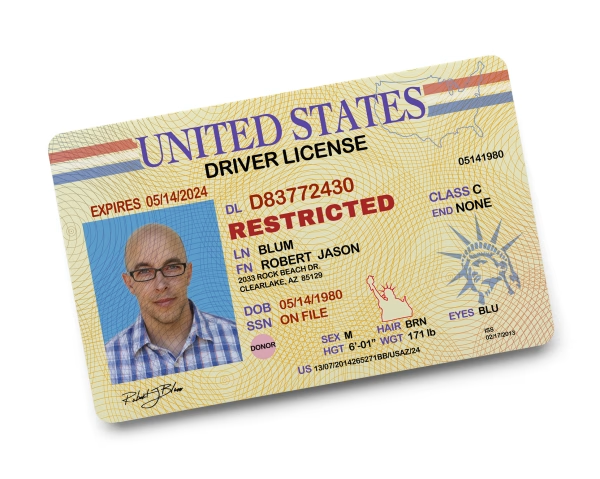
What Is a Restricted License in California?
A standard restricted license is a driver’s license that allows drivers limited driving privileges to travel to work and DUI classes. California also offers an alternative license permitting unlimited driving for drivers convicted of an alcohol-related DUI who install an IID.
How to Apply for a Restricted License
Regardless of the license type, there are certain rules you must follow to obtain one. Here are the necessary steps:Serve the mandatory suspension period
Suspension periods are waived for IID licenses.
Enroll in DUI school
You do not need to complete the program before getting a restricted license.
Obtain high-risk insurance
The SR-22 form must be on file with the DMV before you can get a license.
Install an ignition interlock device
IID installation is not required for those convicted of first offenses or drug-only DUIs.
Pay the necessary DMV fees
Costs may vary, please check with your attorney or the DMV to learn exactly how much you may need to pay.
Who Qualifies for a Restricted License After a DUI?
Not all drivers can get a restricted license. While your DUI attorney can help explain whether you qualify, typically, the following groups of people are ineligible:
- Juveniles convicted of driving under the influence who do not qualify for a critical need exemption.1
- Anyone who refused to take a chemical test.
- Those caught driving on a suspended license.
Commercial drivers can obtain a restricted license by downgrading to a non-commercial license.2
Types of DUI Restricted Licenses in California
There are two options: Employment/Treatment Programs and IID. The rules of the two programs are very different.
Employment/Treatment Program Restricted License
This “classic” option requires drivers to wait until their “hard suspension” ends (this varies based on the conviction) before obtaining a license. Once the hard suspension is over, a driver can obtain a license that will allow them to drive only to work and DUI classes during designated times.
With an employment/treatment program license, drivers can drive non-commercial company vehicles as required by their employer.
IID Restricted License
“In recent years, the DMV created a program that allows unlimited driving privileges as long as the driver installs and uses an IID device in their vehicle,” explains attorney Peter Liss. “With these licenses, drivers can go anywhere at any time, as long as they are operating a vehicle equipped with an IID.”
The flexibility of these licenses and the lack of waiting periods are why many people convicted of a first offense still choose to install an IID, though they are not legally required to do so.
Drivers with IID licenses can use company vehicles that are not equipped with an IID as part of their job, but only if the employer has already filed an Employer’s Exemption form and the driver takes the form with them at all times.
Note that because ignition interlock devices only measure alcohol, drivers convicted of drug-only DUI offenses usually cannot qualify for an IID-restricted license.
Learn more about Ignition Interlock Devices here.
How Soon Can You Get a Restricted License After a DUI in California?
Previously, California drivers charged with DUI had to wait for their hard suspension to end before applying for an employment/treatment restricted license. Now, installing an IID can allow some drivers to bypass these waiting periods and restrictions. Those convicted of driving under the influence of drugs cannot have the waiting period waived by installing an IID since these devices cannot measure drug use.
The hard suspension time before you are eligible for a traditional restricted license varies based on the conviction type. However, all drivers accused of an alcohol-related DUI with a prior conviction are required to install an IID, and thus can avoid these waiting periods. The only people who need to go through the hard suspension are:
- First-time offenders who do not install an IID
- Drivers charged with drug-only DUIs
First-offenders often choose to install an IID to avoid the restrictions of a standard restricted license, but this option is not available to drug-DUI offenders.
In these cases, here’s how long drivers must wait after their suspension starts to obtain a restricted license in California:
| Offense Number | Waiting Period |
|---|---|
| First Offense | 30 Days |
| Second Offense | 90 Days |
| Third or Subsequent Offense | 1 Year |
| DUI with Injury | 1 Year |
| DUI Causing Death | 1 Year |
Learn how to avoid suspension entirely, on our DMV hearing defense page.
How Long Does a Restricted License Last?
To get your full license back, you must serve out your entire suspension term, regardless of whether you received a restricted license. Suspension lengths vary by offense, specifically:
| Offense Number | Suspension Length |
|---|---|
| First Offense | 6 Months |
| Second Offense | 2 Years |
| Third Offense | 3 Years |
| Fourth or Subsequent Offense | 4 Years |
| DUI with Injury | 1 Year |
| DUI Causing Death | 1 Year |
What You Can and Cannot Do With a Restricted License
With an IID license, you may drive any time, anywhere in an IID-equipped vehicle, but you cannot operate commercial vehicles. Traditional restricted licenses have more rules.
You Can:
- Drive to Work
- Drive to DUI School
You Can’t:
- Drive Recreationally
- Travel Outside of Approved Hours
- Operate a Commercial Vehicle
Can You Drive to Work After a DUI in California?
Yes, but only while your temporary license is still in effect or after you get a restricted license. If you do not have a valid license, you must choose an alternative means of transportation, or you can be charged with driving on a suspended license.
What Happens If You Violate a Restricted License?
“If you break your license agreement by driving outside designated locations/times, or by driving a vehicle without an IID, you can be charged with a misdemeanor or an infraction under 14603 (VC)3,” warns Liss. This offense is punishable by:
- Up to six months of jail time
- Loss of restricted license
- Additional suspension period
- One point on your DMV record
Sometimes, drivers can even be charged with driving with a suspended license due to a DUI (14601.2 (VC)). This misdemeanor crime is punishable by:
- Up to six months of jail time
- Fines of up to $1,000
- Inability to get a restricted license
- Additional suspension period
- Two points on your DMV record
- Mandatory IID installation
Find more information on fighting driving on a suspended license charges here.
Temporary License Vs. Restricted License Vs. Full License Reinstatement
After a DUI, you may have one of three types of licenses: a temporary license, a restricted license, and a reinstated, full license. Here’s how each is unique:
Temporary License
After a DUI arrest, the officer will take your driver’s license and issue you a temporary license valid for only 30 days. Once it expires, you will automatically lose your driving privileges.
Restricted License
After the suspension kicks in, you may be able to obtain a restricted license, which will limit where and when you can travel or require you to only use vehicles fitted with IIDs. You must abide by these rules throughout the rest of your suspension period.
Full License Reinstatement
After your license suspension period has ended, you may get a standard license back, once you:
- Show that you completed your required DMV course.
- Obtain SR-22 insurance and wait for the company to send the form to the DMV (you must continue to carry this policy for three years).
- Install an IID in your vehicle (if necessary).
- Pay a reinstatement fee to the DMV.
How a DUI Attorney Can Help Get You Back on the Road
If you want to get a restricted license after a DUI conviction in California, your lawyer can help:
- Determine if you qualify for a restricted license.
- Find a location to install an IID.
- Secure SR-22 insurance.
- Understand the rules you need to follow under your license agreement.
If you have any questions about restricted licenses and California DUI law, please call (760) 643-4050 to schedule a free consultation with attorney Peter M. Liss.
Frequently Asked Questions About Restricted Licenses
Can I Drive Anywhere with a Restricted License?
It depends on the type of license. With traditional restrictions, you can only travel to and from work and DUI classes. If you install an IID, though, you may be able to travel whenever and wherever you want.
Does a Restricted License Affect Your Driving Record?
While it will appear on your driving record, it will not negatively affect it, and it will be removed 10 years after the date of your DUI arrest.
Can You get a Restricted License for a Second DUI?
Yes, but those with a prior DUI conviction will be required to install an IID if the new charge is alcohol-related. Those with a prior conviction who are charged with a drug-related DUI will have to wait longer to obtain a restricted license. All drivers with a prior conviction must wait longer before having their full license reinstated.
Do You Need an Ignition Interlock Device for a Restricted License?
Only if you have a prior conviction and have been charged with an alcohol-related DUI. For a first DUI, IIDs are optional, but they can allow you to get back on the road without any waiting period and without so many restrictions. Those charged with a drug-only DUI do not need to install IIDs, but they must wait for their full hard suspension period to end before they can apply for a restricted license.
Can Commercial Drivers get Restricted Licenses?
Yes. However, the license will be downgraded, so these drivers will be unable to operate commercial vehicles.
Can a Minor Get a Restricted License?
For the most part, minors who receive DUIs cannot obtain restricted licenses from the DMV unless they can prove hardship conditions that show they have a “critical need.” A lawyer can help you prove hardship if you believe you may qualify.
Legal References
- Application for Critical Need Restriction (California DMV) ↩︎
- DUI First Offenders (California DMV) ↩︎
- Vehicle Code 14603 (California Legislative Information) ↩︎